


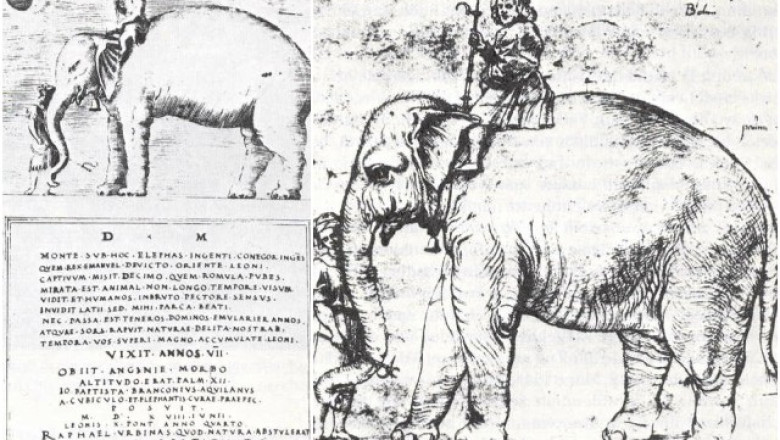

Legend tells a tale so peculiar that it might seem to spring from a myth or a riveting piece of fiction. Yet history sharply attests to its reality: the intriguing account of an elephant buried beneath the Vatican. Could it be that the symbol of papal majesty, the Vatican itself, unknowingly boasts an ancient creature's tomb underneath its resplendent confines? This unique narrative unfolds a fascinating juncture of history, culture, and animal diplomacy, revealing the tale of a vibrant life snuffed out prematurely.
In the Renaissance period, Hanno the Elephant – a white elephant hailing from Cochin, India – became a symbol of fascination and amazement. An exotic gift from King Manuel I of Portugal, Hanno was presented to the then Pope Leo X in 1514. The arrival of Hanno even inspired an elaborate parade in Rome, catching the wide-eyed fascination of both nobility and plebeians alike. The pageantry showcased Hanno with an entourage featuring a troop of Portuguese horsemen, a pair of rare leopards, and many other attired papal guards.
Pope Leo X developed a deep fondness for Hanno. He was a charming and entertaining companion, and the Pope often used Hanno for public spectacles that demonstrated the Church's power and influence. The people of Rome, captivated by the foreign creature in their midst, quickly grew fond of the gentle giant, recognising him as a symbol of pontifical grandiosity.
Yet, the combination of the Roman climate, unaccustomed diet, and an ignorant practice of veterinary medicine were too harsh for the young elephant. Documented accounts point to the fact that Hanno, suffering from constipation, was administered a potent laxative which sadly led to his demised. The adorable giant's death in 1516, only two years after he had become the star attraction of Rome, was a profound shock, deeply affecting the Pope and causing widespread grief among Romans.
To commemorate Hanno's life and his influence on Rome, Pope Leo X commissioned the famed artist Raphael to create a monument in his honour. Offering a dormant yet resolute tribute, the monument depicted Hanno in all his glory, the epitaph intricately inscribing his journey from an Indian jungle to Roman grandeur.
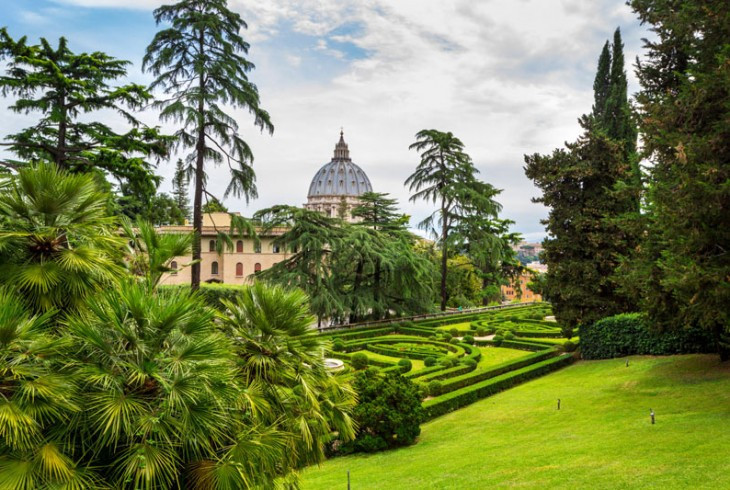 Vatican Gardens
The question remains: why is Hanno buried in the Vatican gardens, more known for their meticulously arranged paths and ornate fountains than a graveyard for an exotic creature? Part of the answer lies in Hanno's elevated status during his life. He wasn't merely an animal; he was a treasured friend of the Pope who commanded a place of prestige in the Church and the city. His ceremonial resting place served as an enduring testament to the rarity of his presence in the notoriously remote city of Rome.
Moreover, Hanno's burial at the Vatican represents a symbolic significance that goes beyond mere physical presence. It serves as an allegory of the grandeur and extravagance of the Renaissance papacy while standing as a poignant testament of the bridging of geography, bridging diverse cultures and species.
The story of the elephant beneath the Vatican encapsulates a confluence of world history, religion, and human-animal relationships. It's also a distinct echo of an era marked equally by display of power and an urgent curiosity to understand the wider world. On a broader canvas, the tale underscores that despite the vastness of human constructs and institutions, we are deeply intertwined with the natural world, a truth embodied by the resident of this unusual grave beneath the Vatican's foundations.
References:
- Bedford, John (1973). "The Enigma of the Elephant". The Burlington Magazine.
- Schwartz, Vanessa R. (2007). "Leo Africanus's Descrittione dell-Africa and Its Sixteenth-Century Translations". Journal of the History of Ideas.
- Watanabe, John M. (1983). "From Saints to Shibboleths: Image, Structure, and Identity in Maya Religious Syncretism". American Anthropologist.













Comments
0 comment