


Pheidippides, an Ancient Greek herald, has irrefutably made his mark on history, inspiring the present-day marathon. Hailing from the heart of Athenian democracy, Pheidippides embarked on a remarkable journey that has been celebrated for millennia and shapes a significant contemporary sporting event.
The legend of Pheidippides dates back to the renowned Battle of Marathon in 490 BCE, a pivotal conflict occurring within the Greco-Persian Wars. Faced with an imminent Persian invasion, the Athenians called upon allies for support. Pheidippides, a renowned runner known for his exceptional endurance and physical prowess, was entrusted with the critical task of delivering the message.
Pheidippides' remarkable tale began as he was tasked to travel to Sparta, which entailed a gruelling journey covering over 240 kilometres. Proving his mettle, Pheidippides managed the strenuous journey in less than 36 hours, displaying an extraordinary feat of endurance. Despite the inhospitable terrain and harsh climate, he delivered his message with unwavering determination but was met with disappointment as the Spartans were involved in a religious festival and could not send aid immediately.
Undeterred by this setback, Pheidippides returned to Athens, traversing the arduous route once more. Upon his return, despite the absence of Spartan support, the Athenians decided to face the Persians head-on. What unfolded was the historic Battle of Marathon, where the Athenians, against all odds, emerged victorious.
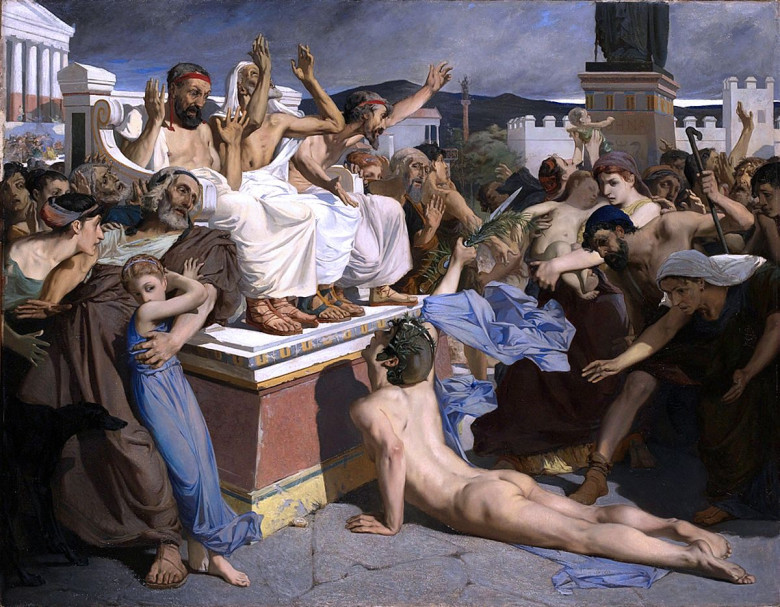
However, the most popular and enduring legend recounts that Pheidippides, in the aftermath of the victory, ran from the battlefield to Athens, a distance of approximately 42 kilometres, to bring the joyful tidings. He supposedly sprinted into the assembly, exclaimed "nenikekamen" ("we have won") and promptly collapsed and died from exhaustion.
This final sprint, although lacking corroborative historical evidence and being steeped in legend, is what captures popular imagination and has given birth to the modern concept of a marathon. It exemplifies the pure spirit of endurance, determination and the triumph of human will.
In 1896, during the inauguration of the modern Olympic Games, the Pheidippides marathon was incorporated in honour of this legendary feat. The race covered a distance roughly equivalent to that run by Pheidippides, from Marathon to Athens. Over time, the marathon's popularity swelled, attracting athletes worldwide and serving as a cornerstone event in track and field athletics.
Today, thousands participate in marathons across the globe, challenging their mental and physical limits, embodying the same spirit of determination and resilience that Pheidippides displayed over two millennia ago. The marathon event's enduring popularity continues to perpetuate the legend of Pheidippides, bridging the chasm of time between our contemporary world and the dusty plains of Ancient Greece.
Pheidippides' tale is a profound testament to human endurance, capturing the essence of the human spirit's invincibility when faced with daunting odds. The gallant Greek messenger's footsteps on the arduous path from Marathon to Athens continue to reverberate in the hearts of marathon runners worldwide. So, as the pounding of running shoes echoes worldwide, so too does the indomitable spirit of Pheidippides, the legendary Greek messenger who inspired the marathon.

Further Reading
- Herodotus, The Histories.
- Lucian of Samosata, 'A Slip of the Tongue in











Comments
0 comment