


The Andamanese tribes
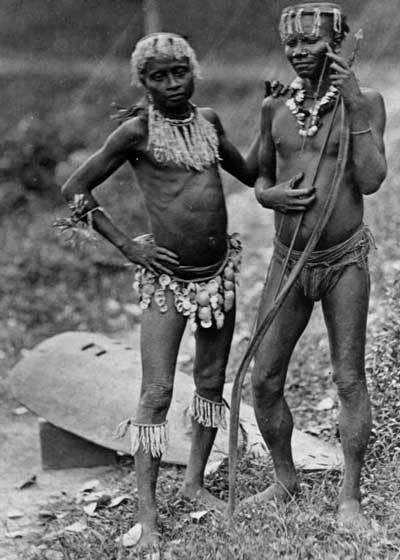 People from the Sentinel Tribe
The Andaman Islands have been inhabited for at least 60,000–70,000 years, the first people to arrive here from India or Burma following the Great Migration from Africa to the East, which took place about 20,000 years before Europe was inhabited. For thousands of years, the societies that populated this archipelago were not disturbed by any external influence, which led to the development of several indigenous groups, including the Great Andamanese, Jarawa, Onge, Shompen, Jangil and the Sentinels.
It is estimated that in 1789 there were 10,000 members of the Great Andamanese group. In the middle of the 19th century, the British transformed the Andaman Islands into a penitentiary colony, eliminating the locals who opposed the arrival of the intruders. Andamanese who was not attacked by the British died as a result of contracting modern diseases. In 1901, the number of Andamanese had been reduced to 600, and in 1927 to 100. Today, only 52 Andamanese live.
Many of the detainees remained here and after the punishment, the islands with a tropical climate and white sandy beaches are attractive to many deported Indians. Over time, many settlers from India and Burma also settled here, which also contributed to the decimation of the archipelago tribes.
The Jangil tribe disappeared in the early 20th century, followed by Oko-Juwoi and then most of the other peoples of the archipelago. However, their fate was not shared by the Jarawa and Sentinel tribes, who violently rejected any connection with the outside world. Eventually, however, the Jarawa tribe accepted the contact since 1998, and now its existence is threatened by measles and tourism, by poachers hunting for food and by expanding settlements and roads built by settlers living in the archipelago.













Comments
0 comment